Entry · Ref AYJATJC4
Fire Safety Inspections Denver: What Is Typically Reviewed and Why Annual Checks Matter
- Posted
- 2026-10-21
- Last amended
- 2026-10-21
- Account
- @frontrangefirecode799
If you manage or own a commercial building in Denver, annual fire safety inspections are not just another line item on the calendar. They are one of the clearest ways to see whether a property is actually ready for an emergency, not just whether it looked compliant the day it opened.
Denver’s fire code enforcement involves the Fire Code Official, the Fire Marshal, and the Denver Fire Department Fire Prevention Division. In practice, that means inspections are tied to real authority, real documentation, and real correction requirements when hazards are found. For commercial and institutional properties, Denver describes fire safety inspections as typically taking place about every 12 months. That annual rhythm matters because fire protection systems age, tenant spaces change, storage creeps into the wrong places, and small maintenance gaps can quietly turn into life safety problems.
A lot of owners assume the annual visit is mainly about extinguishers or sprinklers. Those are part of the picture, but they are not the whole picture. A typical fire safety inspection in Denver looks more like a broad readiness review. The inspector is looking at how people would get out, whether critical systems appear maintained, whether access is blocked, and whether records support the condition of the building.
What the inspection is really trying to answer
At its core, a fire safety inspection asks a simple question: if a fire started today, would the building protect occupants the way it is supposed to?
That question reaches into several areas at once. It touches the physical layout of the building, the condition of safety features, and the paper trail behind required inspections, testing, and maintenance. A building can look tidy and still fail that real-world test. A corridor might be clear at first glance but lead to an exit door that does not function properly. Emergency lighting might be installed but not documented. A sprinkler riser room might appear in order while the supporting records tell a different story.
That is why annual inspections matter so much in commercial fire protection Colorado work. They bring the building back under a disciplined review cycle. They also force a conversation between property operations, maintenance teams, and fire protection vendors. When that coordination is missing, small problems tend to pile up quietly.
What Denver commonly reviews during annual inspections
Denver’s own inspection materials describe several recurring review points, and they are practical ones.
Exits and the path to safety
Exits are one of the first things inspectors care about because they affect survival in the first minutes of an emergency. The concern is not just whether an exit exists on the plans. It is whether people can actually use it under pressure, in smoke, or in a power loss.
That means exit access and exit discharge conditions matter. A blocked hallway, storage narrowing a path, or a door that is difficult to operate can turn a code-compliant route on paper into a dangerous bottleneck in reality. Buildings that have gone through tenant changes are especially vulnerable here. Furniture shifts, merchandise expands, equipment lands where it should not, and suddenly the route that was once clean is no longer reliable.
I have seen this pattern often enough in commercial settings: nobody intends to create a hazard, but routine operations slowly steal space from life safety. Annual fire safety inspections Denver property managers deal with are useful because they reset expectations before that kind of drift becomes normal.
Emergency lighting
Emergency lighting gets underestimated because it sits quietly until the worst possible time. During a fire alarm, or any event that knocks out normal lighting, occupants need immediate visual guidance. Panic rises quickly in dark stairwells, corridors, and exit paths.
An inspector reviewing emergency lighting is not doing it for appearances. This is about whether people can orient themselves fast enough to move toward safety. In older buildings or heavily remodeled spaces, emergency lighting can be one of those details that gets overlooked during daily operations. It may still be present, but maintenance records and function matter.
This is where the annual cycle helps. One missed check might seem minor. A year or two of missed attention can leave a property with lights that are installed, assumed to be fine, and not actually ready when needed.
Fire-resistive separations
Fire-resistive separations are less visible to occupants, but they are a major part of how a building limits fire and smoke spread. These assemblies buy time. They help keep a fire from racing from one area to another and support safer evacuation and response.
Inspectors review these separations because building use changes can compromise them. A wall that once performed as intended may later have unprotected penetrations, altered doors, or repair work that was never properly addressed. These are not glamorous issues, but they are exactly the kind that annual inspections can catch.
This is also where owners learn a hard lesson about fragmented work. One contractor handles electrical, another handles networking, another handles renovations, and suddenly a rated assembly has been affected by a series of small modifications. Nobody person set out to create a problem, but the overall protective intent of the building has been weakened.
Fire lanes and access
Fire lanes are easy to ignore until an apparatus needs them. Denver inspection materials specifically note review of fire lanes, and for good reason. Emergency response depends on access. If a lane is blocked, narrowed, or effectively unusable, the problem does not wait politely for a future correction. It affects the moment when crews arrive.
This is one of the simplest areas to explain to tenants and staff because the consequence is obvious. Fire department access is not decorative pavement. It is operational infrastructure. Even temporary misuse can create serious issues.
Test records for fire safety systems
One of the most important inspection elements is record review. Denver materials note that test records for fire safety systems may be reviewed. That point deserves more attention than it usually gets.
A building can have a fire alarm panel, sprinklers, extinguishers, and other systems in place, but without proper records, the owner has a harder time showing those systems are being inspected, tested, and maintained as required. Documentation is not bureaucracy for its own sake. It is evidence that the protective features of the building are not being left to chance.
This is where several specialized services come together. Records tied to fire alarm monitoring Denver providers, fire extinguisher inspections Denver contractors, fire pump inspection Denver work, and backflow inspection Denver service may all become relevant depending on the building systems in place. The city’s annual review is not a substitute for those technical inspections. It is the moment when their results often need to stand up as a complete story.
Why NFPA standards keep showing up in the conversation
Owners sometimes hear references to NFPA and tune out, assuming it is just technical jargon. It is more practical than that.
NFPA 72 is the national code for fire alarm and signaling systems, including design, installation, inspection, testing, maintenance, and emergency communications systems. NFPA 25 covers inspection, testing, and maintenance of water-based fire protection systems. Those two standards matter because many of the records reviewed during inspections are rooted in the work they govern.
If your property relies on alarm notification, supervision, and monitoring, NFPA 72 is part of the framework behind that work. If your building has sprinklers, standpipes, or related water-based components, NFPA 25 shapes the ongoing care those systems require.
That is why NFPA compliance inspections Colorado businesses talk about are not some abstract exercise. They connect directly to whether a property can demonstrate that its alarm and water-based systems have been properly maintained over time.
Annual inspections catch slow-moving problems before they become urgent
There is a big difference between a catastrophic failure and a slow decline. Most buildings do not wake up one day with every life safety feature broken. What happens more often is a gradual slide.
A few records go missing after a staff change. A service date passes during a busy quarter. A remodel changes a wall condition. A door gets propped open regularly and then stays that way. A storage room expands into a corridor. On their own, each issue may feel manageable. Together, they tell a different story.
That is one reason annual checks matter so much. They create a hard stop every twelve months, a moment when assumptions are tested. For owners who stay ahead of the process, that is a good thing. It is far easier to correct a documentation gap or access issue during routine operations than during a major project, a complaint-driven visit, or after an incident.
Permits, alterations, and why inspection readiness starts before the inspector arrives
Many fire protection problems begin upstream, during construction, alterations, or repair work.
Denver requires permits for most construction, alteration, or repair work on private property. The city also has a fire protection engineering review component in its plan review process, and acceptance or approval is required before final sign-off of fire alarm and fire protection permits. On top of that, Colorado law says fire suppression system installation, modification, alteration, or repair generally cannot begin until required permits are obtained and the job is registered, with working plans and hydraulic calculations reviewed and approved.
That sounds procedural, but it has a direct impact on annual inspections. If a building has undergone work without the proper permitting or approval path, questions often show up later when records are reviewed or when system conditions do not match expectations.
This is particularly relevant in projects involving fire sprinkler installation Denver contractors, fire suppression systems Denver upgrades, or broader fire protection Denver remodel scopes. Owners sometimes assume the contractor is handling everything and stop asking questions. Good contractors do handle a great deal, but ownership still benefits from understanding whether permits, reviews, and acceptance have been completed. That paperwork trail often becomes important long after the project itself is over.
Denver has also adopted new 2025 Building and Fire Codes effective December 31, 2025, with some projects allowed to use either the 2025 or 2022 code set depending on submittal date. For owners planning work around that transition, timing and documentation deserve close attention. A building can be well run operationally and still stumble if project records do not line up with the applicable code path.
The systems behind the records
An annual inspection may focus on conditions and documentation, but behind that documentation are highly specific systems that need their own qualified attention.
Fire alarm monitoring Denver service is part of a larger life safety chain. Monitoring matters, but so do the initiating devices, notification appliances, fire protection company near Denver supervision features, and maintenance records governed through fire alarm requirements. If the alarm side of the building is neglected, the gap may show up during record review or acceptance questions.
Water-based systems raise a similar issue. A property may have sprinklers, and in some cases supporting equipment such as pumps or backflow prevention assemblies. That is where fire pump inspection Denver and backflow inspection Denver work become part of the larger compliance picture. Denver’s annual review is not duplicating technical service work, but it may expose whether the owner has kept up with the required care of those systems.
For specialty hazards, fire suppression systems Denver businesses rely on, such as kitchen or equipment protection, are often mission critical even when they are not visible to most occupants. They deserve the same level of scheduling discipline as more obvious building systems.
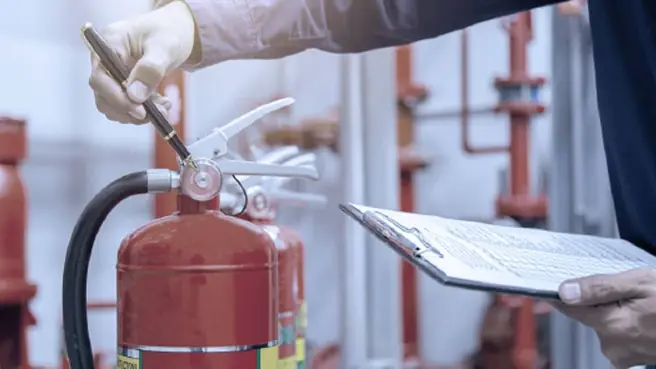
And then there are extinguishers. They are familiar, portable, and easy to take for granted. Yet fire extinguisher inspections Denver properties maintain are often one of the simplest signs of whether a site takes routine life safety seriously. When basic items are overdue or poorly documented, inspectors may reasonably wonder what else has been slipping.
What smart building teams usually have ready
When a property is organized, the inspection tends to go more smoothly because the building condition and the paperwork tell the same story. It helps to have a short set of records readily available:
- recent test and maintenance records for fire safety systems
- documentation tied to fire alarm and water-based system work
- records for extinguisher service, if applicable to the property setup
- permit and acceptance paperwork for recent fire protection changes
- contact information for vendors handling monitoring or emergency service
That is not about impressing the inspector. It is about reducing confusion. Missing records slow everything down and often trigger unnecessary scrambling.
When problems are found
Denver materials note that violations can trigger an order notice for correction. That is another reason annual inspections deserve attention before the scheduled visit rather than after it.
A correction notice is not just a paperwork inconvenience. It can disrupt operations, force urgent coordination with vendors, and expose larger maintenance habits that need fixing. In busy facilities, the cost of reactive fire protection work is often not just the repair itself. It is the administrative time, tenant communication, scheduling pressure, and operational interruption that come with doing everything late.
There is also a practical point here. Some inspections and acceptance activities may involve coordination with the Fire Department, and special inspections can occur outside normal business hours when needed. Once a property falls behind, scheduling becomes less flexible and more expensive in terms of staff time and disruption.
A few common trouble spots before the annual visit
Most annual inspection issues are not mysterious. They tend to be familiar operational lapses that nobody circled back to fix.
- exits or exit paths narrowed by storage, displays, or equipment
- emergency lighting concerns or missing supporting test records
- unresolved changes affecting fire-resistive separations
- blocked or misused fire lanes
- incomplete records for alarms, sprinklers, pumps, suppression, or other systems
That short list is not exhaustive, but it covers the kinds of things that repeatedly create friction.
Why annual checks matter even when nothing seems wrong
One of the biggest mistakes a property team can make is assuming that no visible problem means no meaningful risk.
A lot of life safety systems are passive until the day they are needed. Fire-resistive construction does its job quietly. Emergency lighting says nothing until normal power fails. Alarm supervision works in the background. Sprinkler components can sit for long periods without drawing attention. That quiet performance is exactly why annual review matters. It interrupts complacency.
It also protects against turnover. Buildings change hands. Facility managers move on. Service vendors change. Tenants remodel. During those transitions, knowledge is often lost faster than anyone expects. The annual inspection becomes a valuable checkpoint that reconnects the current team to the actual status of the property.
For owners pursuing dependable fire system certification Colorado processes or trying to maintain stronger internal standards, the annual cycle is part of good governance. It is proof that the building is not being managed on memory alone.
The healthiest approach is year-round, not seasonal
The best-run properties do not treat fire safety inspections Denver officials conduct as a once-a-year performance. They treat them as a yearly confirmation of work that has already been happening.
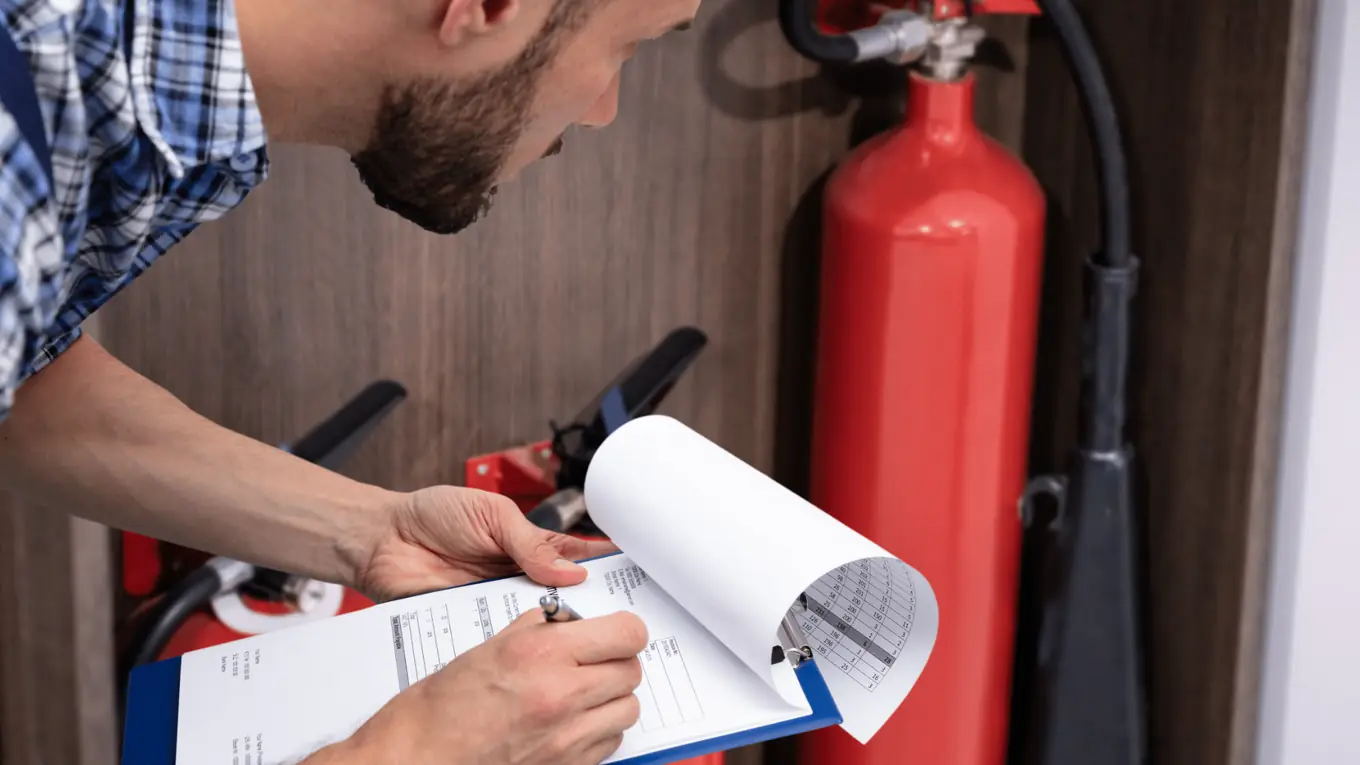
That means keeping records current, paying attention after tenant improvements, asking questions when fire protection work is performed, and understanding that permit and acceptance steps are not optional details. It also means connecting the dots among your providers. Commercial fire protection Colorado is not one service, it is a network of responsibilities. Monitoring, sprinkler work, suppression, extinguisher service, pump work, and backflow work can all sit with different vendors. If nobody on the ownership side is watching the whole picture, gaps appear.
Emergency fire protection Denver planning benefits from that broader view. A building is safest when systems, paperwork, and daily operations support one another. Annual inspections are valuable because they test whether that coordination is real or only assumed.
For most properties, the goal is not perfection. It is consistency. Clear exits, functional emergency lighting, intact separations, open fire lanes, and reliable records go a long way. So does taking permit and acceptance requirements seriously whenever work is performed. When those habits are in place, the annual inspection feels less like a threat and more like what it should be, a professional check on a building that is being responsibly maintained.